01
Intent and facade brief
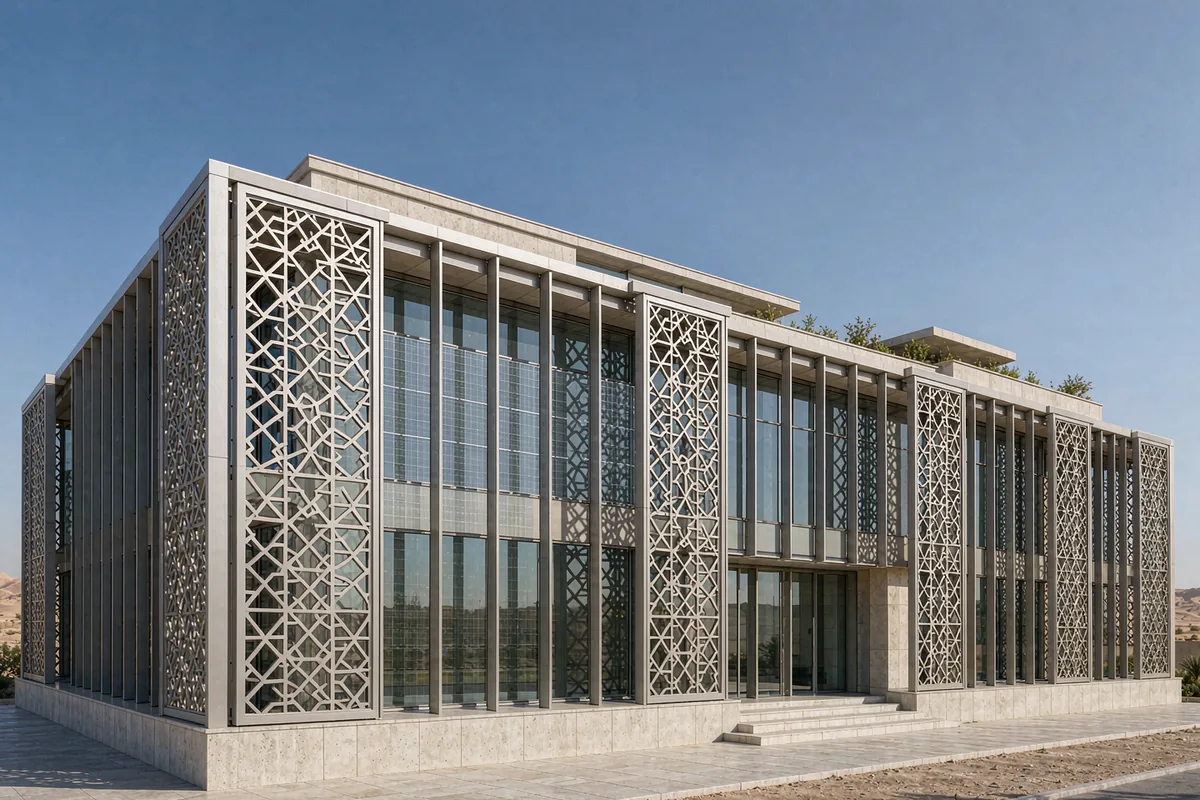
Semi-transparent BIPV glazing sits inside a stick curtain-wall grid on the solar-facing elevations. The brief, aligned with the client's Vision 2030-era sustainability targets, asked for on-site generation without turning the house into a power plant — so the photovoltaic cells are a facade material first and an energy asset second.
02
System and climate response
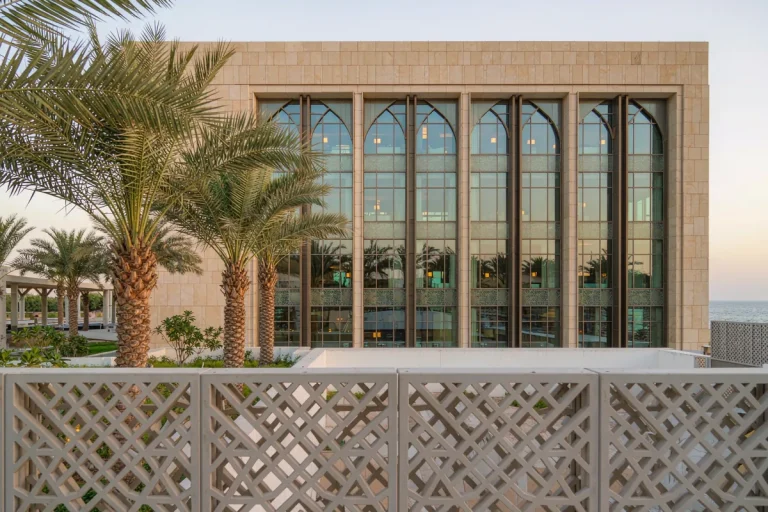
Desert physics drove the engineering. Cell output falls as surface temperature rises, so an external aluminium mashrabiya screen shades the BIPV zones through peak noon — lowering cell operating temperature and improving real-world yield, while also cutting seasonal dust soiling on the glazing.
03
Fabrication and coordination
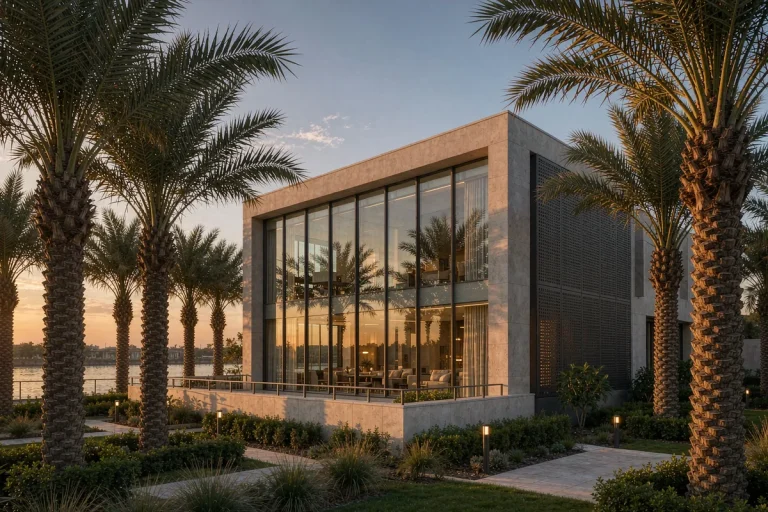
Daylight comfort was modelled rather than guessed: interior lux levels behind the semi-transparent cells were simulated hour-by-hour so living spaces stay usable without blinds fighting the photovoltaics. The build-up uses laminated BIPV units with warm-edge spacers for cold desert nights.
04
Installation and handover
We delivered the full DC-side wiring schematics, string layout and performance-modelling data for the local electrical consultant. The AC side — inverters and grid-connection approval — stayed with the local party, exactly as the scope boundary requires. Delivery was pure T1 with remote engineering support.