Water will reach the outer joint
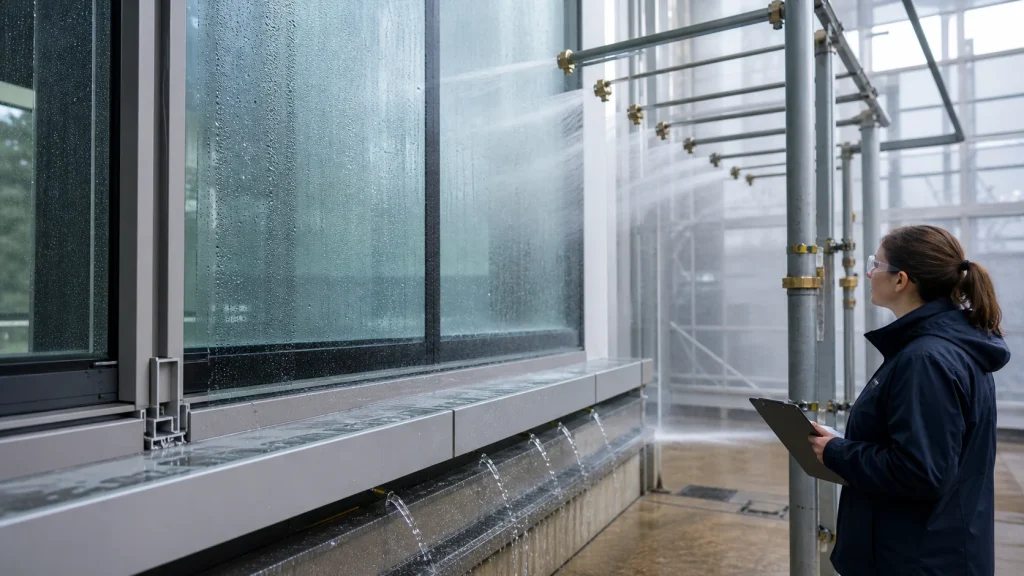
A curtain wall should not assume that the exterior seal remains perfect forever. Wind-driven rain reaches joints; the system must collect it, reduce the pressure that drives it inward and return it safely outside.
That is why the drainage philosophy matters more than adding another visible sealant bead after a leak appears.
Material failure and system failure
A damaged gasket or poorly prepared sealant joint is a material or workmanship failure. Missing end dams, blocked weeps, discontinuous pressure chambers or a sill that drains into the wall below are system failures.
Replacing sealant may temporarily hide a system problem without changing the path the water follows.
Follow the drainage path
A useful drawing makes the path visible from the outer joint to the cavity, across the sill or transom, past each end condition and out through protected weeps. Every splice, corner and change in level must preserve that path.
Dust-prone environments also require drainage openings that remain accessible and functional when the facade is not perfectly clean.
Interfaces deserve their own details
Many leaks begin where the curtain wall meets roofs, parapets, masonry, doors, balconies or adjacent cladding. These are not generic perimeter seals; they are transitions between different movement, drainage and construction tolerances.
The scope matrix should name who designs and installs each transition before work reaches site.
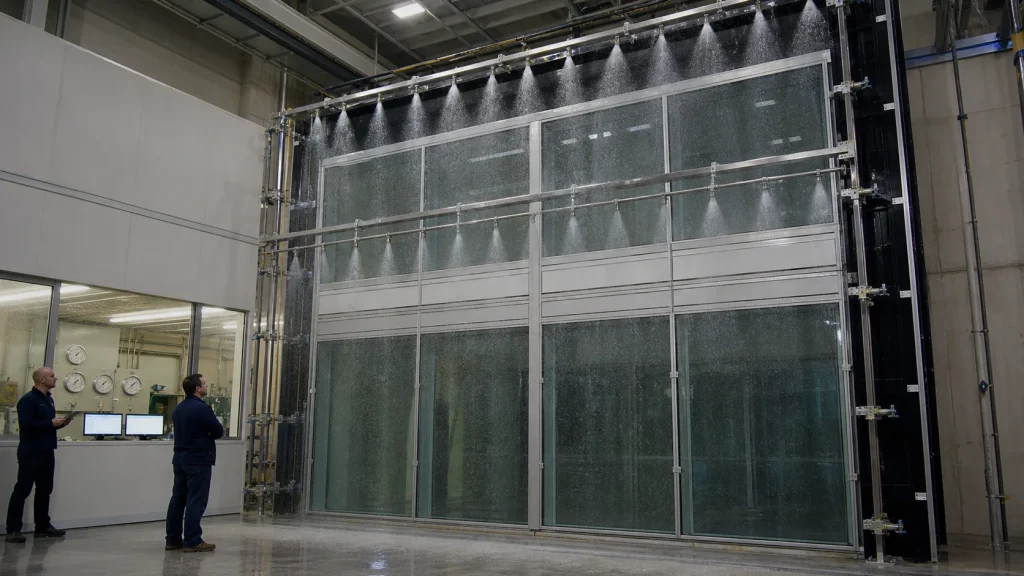
Test the assembly, not the promise
Mock-up and field testing are most valuable when they include representative corners, splices, anchors and interfaces rather than only a perfect centre bay. Test criteria and repair responsibilities should be agreed before the test.
The result is not just a pass or fail. It is evidence that the proposed drainage logic was assembled and inspected as intended.