Coast and inland are not the same
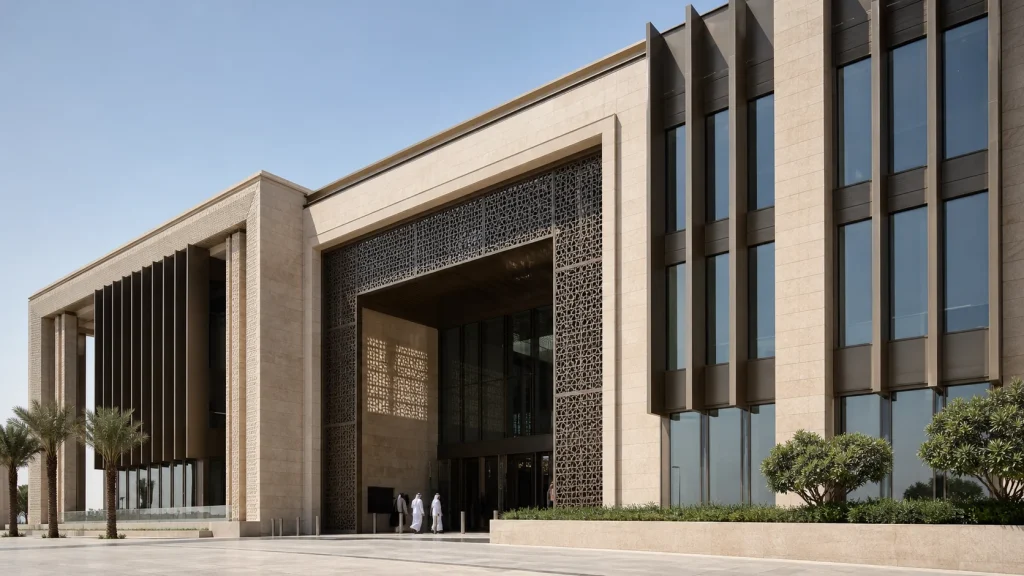
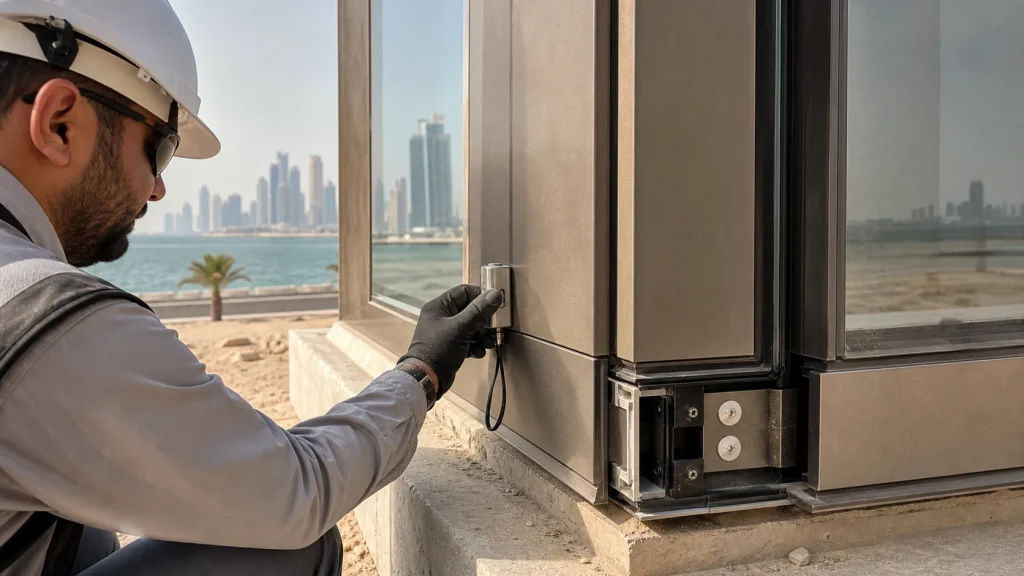
Salt-laden air, humidity, abrasive dust, strong UV and thermal cycling do not act with equal intensity on every Gulf site. A coastal project places greater stress on coatings, fasteners and dissimilar-metal interfaces; an inland site may place more stress on seals, hardware and drainage paths exposed to fine dust.
The project should be classified by exposure before the material schedule is frozen.
Coatings need evidence
A coating name alone is not a durability strategy. The specification should state the performance class or test evidence required, the substrate preparation, colour range, repair approach and batch-control expectations.
Architectural colours also behave differently under intense daylight, so physical samples should be reviewed in conditions that resemble the project.
Small metal parts cause large failures
Fasteners, brackets, rollers and hinges are easy to overlook because they occupy little area. They often determine serviceability. Compatible grades, separation of dissimilar metals and protected bearings matter as much as the visible aluminium finish.
The hardware schedule should be reviewed with the same exposure logic as the facade panels.
Drainage must tolerate dust
Pressure-equalised curtain wall relies on drainage and ventilation paths. Fine dust can reduce their effective area or collect where water is meant to leave. Covered, accessible and generously detailed routes are more resilient than narrow openings that work only when perfectly clean.
Mock-ups and site inspections should include the weeps, end dams and transitions that remain invisible after completion.
Design maintenance into the facade
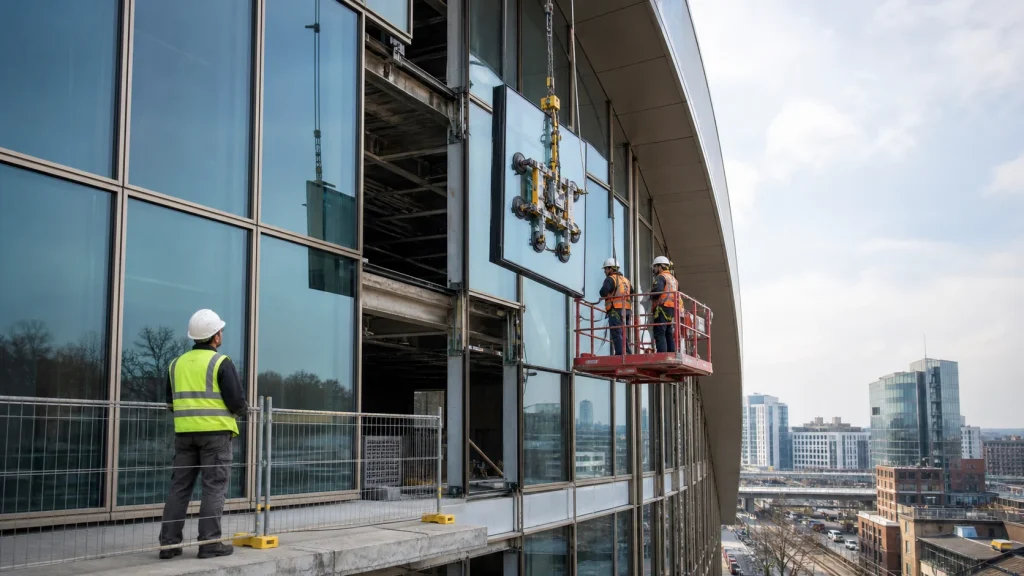
Durability is partly a materials question and partly an access question. Glass, screens, rooflights, folding walls and drainage paths need a realistic cleaning and inspection route.
The handover package should show what must be checked, how often it should be reviewed and which replacement components should remain identifiable.