What you keep vs. what you replace
Most tired shopfronts have sound structure underneath dead skin. The concrete or steel frame stays; the smoked glass, the rusted roller shutter, the plywood fascia and forty years of signage fixings go. A laser survey confirms what the structure can carry before anything is ordered — sometimes the answer is a stronger frame, and better to know it at week one.
The four moves that matter
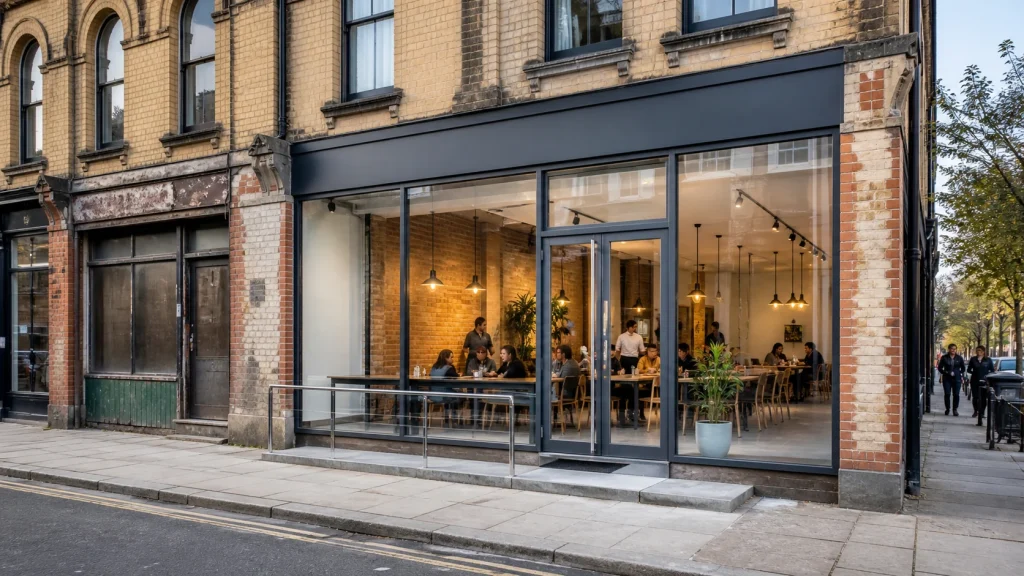
One: open the entrance — oversized pivots or sliding leaves replace the narrow 1970s doorway. Two: raise the glass — full-height glazing turns the shop interior into its own advertisement. Three: hide the shutter — a detail as simple as an internal bulkhead removes the most ageing element on the street. Four: discipline the signage — one fascia zone, clean lighting, done.
None of these moves requires rebuilding the shop. All four together change how the street reads the business.
Trading through the works
Renovations are phased bay by bay precisely so shops can keep trading. Our Bloom & Co. project never closed for more than one consecutive day: survey while trading, fabricate off site, swap bays overnight. The sequencing costs a little in programme but preserves the revenue that pays for the renovation in the first place.
What it costs
A bay-by-bay shopfront renovation typically runs three to six weeks ex-works, with on-site installation measured in days per bay. Budgets commonly land between US$30,000 and US$150,000 depending on width, entrance ambition and how much structure needs help. Send photos of your existing shopfront and we will come back with an indicative figure — the before-and-after conversation starts there.