What drives facade cost
Five factors move a facade budget more than anything else. Area, obviously. But also the glass build-up — triple glazing, laminated panes and solar coatings each add real money per square metre. The finish: anodising and specialty coatings cost more than standard powder coat. Complexity: corner panels, curved glass and inset details multiply fabrication hours. And storey count, which drives installation method more than material.
The system choice then frames everything. Residential and shopfront ranges can support early planning, while public, cultural, commercial and high-rise packages are assessed from facade area, system, performance criteria, programme and delivery scope. Starveil does not apply a seven-storey or US$3 million capability ceiling.
Indicative ranges by project type
Early planning references for smaller scopes remain useful: shopfront renovations may begin around US$30,000–150,000, while custom residential envelopes vary widely with area, glass and geometry. Multi-family, public, cultural, commercial and high-rise packages should be budgeted from measured facade area and a defined performance and delivery brief rather than a generic building-type ceiling.
Treat these as briefing ranges, not quotations. A written budget indication from us, based on your drawings or even clear photos, narrows the number considerably — usually within 48 hours of receiving your enquiry.
How systems compare
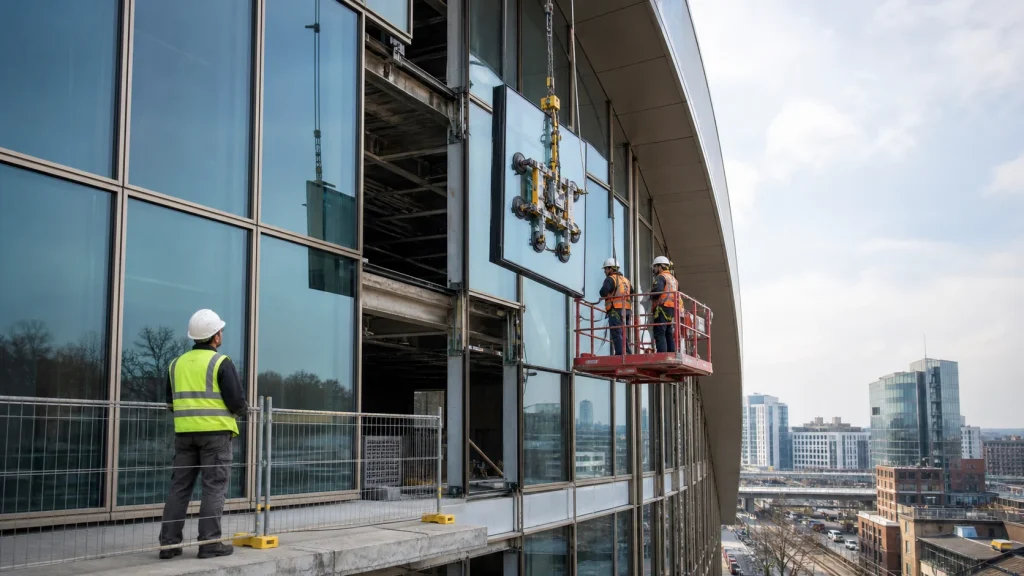
Stick curtain wall is usually the most economical route for one-off envelopes, because it is fabricated as lengths and assembled on site. Frameless facades carry a premium for the glass and the engineering, and repay it in the view. Compact unitized cassettes cost more per square metre than stick, but compress installation time dramatically — on constrained sites or short weather windows, the total project cost often favours them.
Renovation packages are priced by bay rather than by square metre, which is why a shopfront renovation can complete within weeks.
What a Design & Supply quotation includes
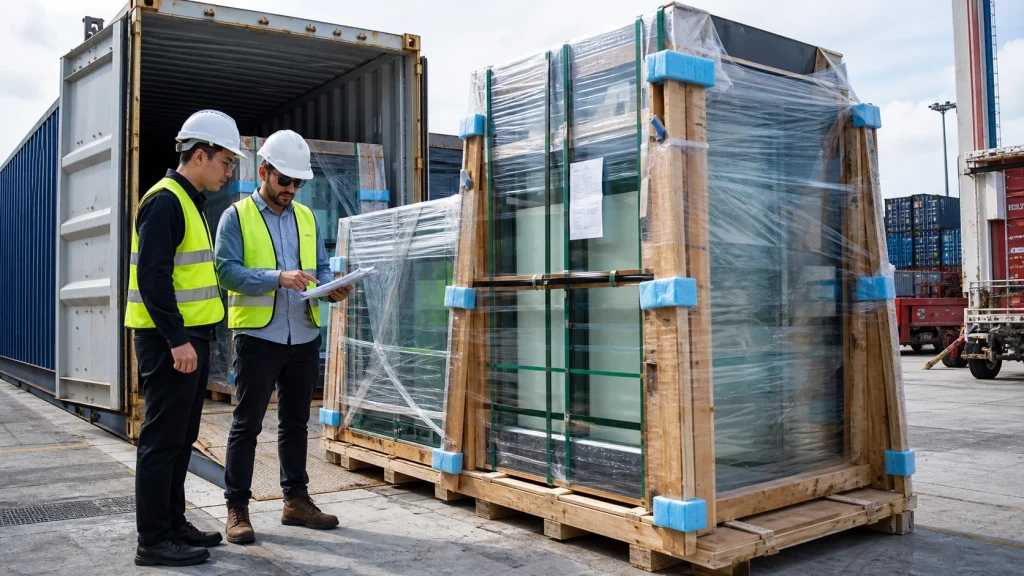
A complete D& S quotation from us states the engineering scope, glass and frame build-ups, finishes, fabrication QA regime, packing and freight terms, and the support level — remote engineering, installation manuals, or a supervising engineer on site. If a line is not in the quotation, we will tell you in writing. Surprise line items are how projects go wrong; we would rather quote honestly and lose a job than win one with a hole in it.
Installation is priced separately and transparently: your own crew with our manuals, your crew with our engineer beside it, or — for the right projects — our own installation.
How to brief for a sharper quote
Send drawings if you have them; if you don't, send photos, a location and rough dimensions. State your target budget range — it saves a round of guessing on both sides. Say who will install. And give us the date that actually matters, whether that's a container date, a crane date or a grand opening. The sharper the brief, the sharper the number.