Start with the project criteria
North America is not one climate or code path. A coastal project, a cold continental city and a hot southern state place different demands on wind, rain, thermal movement, condensation and glass. The design-supply brief must begin with the project specification and local consultants, not a generic regional system.
Starveil's role is to translate those criteria into an engineered, fabricable package and make open assumptions visible early.
Thermal continuity and condensation
Frame thermal breaks, spandrel zones, slab edges, anchors and perimeter transitions all affect interior surface temperatures. In colder climates, a visually minor bridge can create condensation or comfort problems long before the centre of the glass becomes the issue.
The review should connect glass, aluminium, insulation and adjacent construction rather than treating the curtain wall as an isolated product.
Testing and evidence
Project specifications may reference ASTM laboratory tests, AAMA field procedures or other owner and consultant requirements. The useful evidence is evidence matched to the proposed configuration, spans and pressures — not a certificate selected because its title sounds relevant.
Any project-specific mock-up or field-testing scope should state who builds it, who witnesses it, what interfaces it contains and how corrective work is handled.
Local roles stay local
The architect, engineer of record, building-envelope consultant, contractor, installer and authority remain essential local participants. An overseas design-supply package does not replace local professional judgement or jurisdictional approval.
The responsibility matrix should state which calculations and drawings Starveil prepares, who reviews them locally and who owns installation, perimeter work and sign-off.
Plan logistics around installation
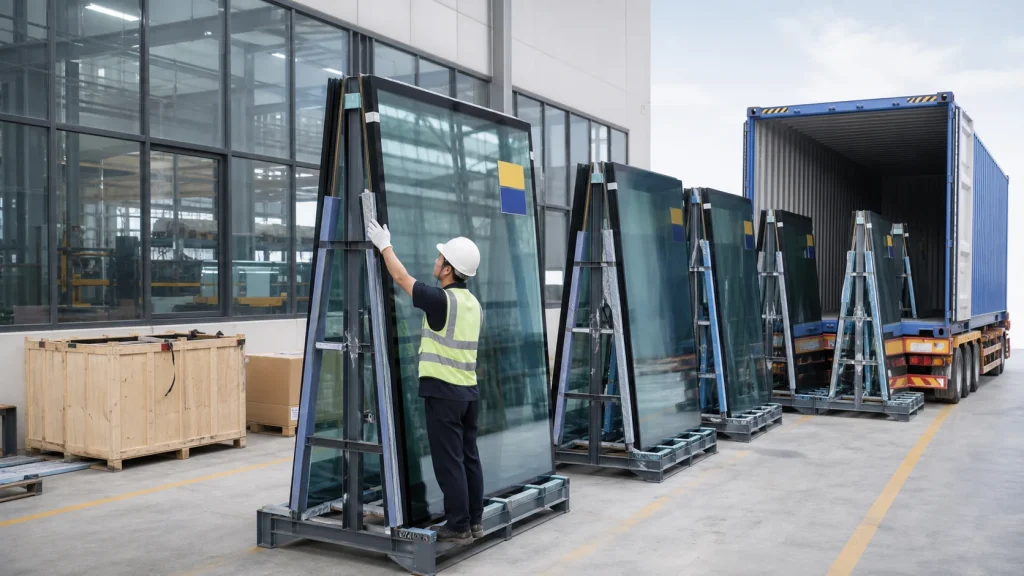
Container sequence, inland transport, storage, lifting, winter protection and crew access belong in the facade programme. A package that arrives before the structure or after the crane window can erase the benefit of factory prefabrication.
The delivery plan should be developed with the installer, then reflected in panel numbering, packing and the release schedule.