Freeze the right information
An export facade becomes predictable when geometry, performance criteria, finishes, interfaces and approvals are frozen before fabrication. Shop-drawing approval is not an administrative signature; it is the point where decisions become material, glass and machining instructions.
The installer should review the interface and setting-out information at this stage because the cheapest site problem is the one removed from the drawing.
Turn drawings into a production system
Panel schedules, component identities and revision control connect the approved drawing set to procurement and machining. The same references should appear on fabrication records, packaging and installation documents.
That chain prevents a late revision from becoming a mix of old and new parts inside the same container.
Make QA travel with the shipment
Remote projects need evidence that survives the distance between factory and site. Dimensional checks, material records, finish batches, glazing records and photographs should remain tied to identifiable panels or lots.
A clear dossier helps the client review progress before shipment and gives the site team a reference when questions arise during installation.
Pack in installation order
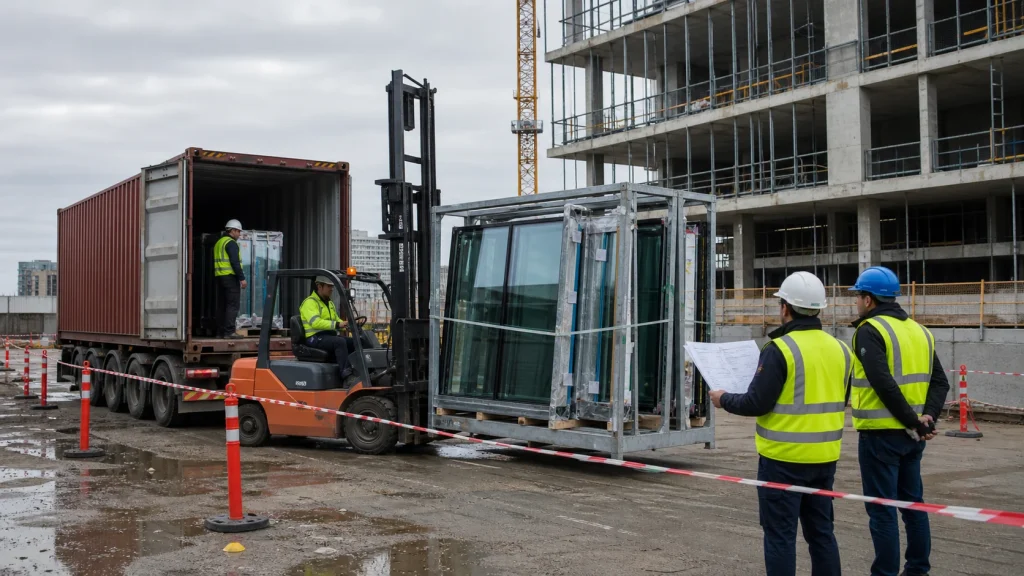
Crates and racks should follow the sequence the site intends to build: elevation, level and bay. Packing lists must use the same names as the panel schedule so the crew does not translate between three coding systems.
The load plan should also respect what must remain accessible first, which components are fragile and which small parts would stop an entire elevation if misplaced.
Write the site boundary before shipping
The contract must name who imports, stores, surveys, sets out, installs, seals interfaces, provides access equipment and signs local approvals. T1 supply, T2 supervision and T3 installation are different scopes, not informal variations of one promise.
A responsibility matrix protects both sides and makes site support faster because every question has an owner.